Bad Black's Dubai surgery and luxury spending highlighted as court dismisses Shs 11bn case against Meddie Ssentongo
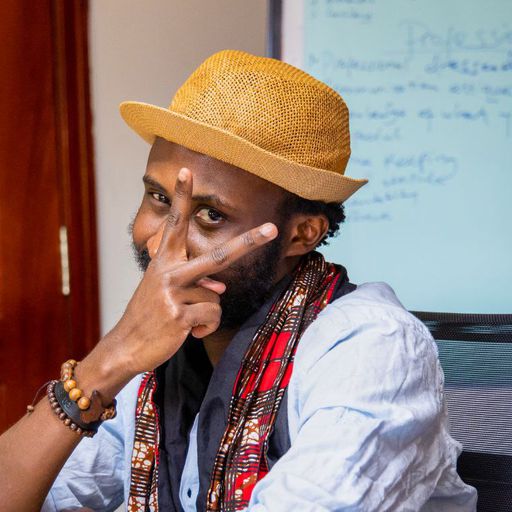

The Court of Appeal has dismissed a $3 million (about Shs 11 billion) recovery case against businessman Meddie Ssentongo after finding that socialite Shanita Namuyimbwa, popularly known as Bad Black, failed to provide credible evidence that she handed him the money.
In a judgment delivered on November 2, 2026, the court found that Bad Black's testimony was unreliable because she had given conflicting accounts under oath and failed to produce evidence linking the missing money to Ssentongo.
The decision brings another chapter of the long-running financial dispute involving Bad Black, Ssentongo, British businessman David Greenhalgh and Davenshan Development (U) Ltd to a close.
The dispute dates back to 2012, when Bad Black and Ssentongo faced criminal charges arising from allegations that money had been diverted from Davenshan Development.
Bad Black faced a separate charge of embezzlement, while both were charged with conspiracy to defraud. The Anti-Corruption Court convicted them on July 6, 2012.
Greenhalgh and Davenshan Development later pursued Ssentongo for $3 million, claiming that Bad Black had transferred the company's money to him.
The company initially included Bad Black in the civil proceedings but dropped its claims against her following a settlement. She subsequently testified against Ssentongo.
In April 2015, High Court judge Henry Peter Adonyo dismissed the recovery suit after finding insufficient evidence that Ssentongo had received the money.
Greenhalgh and the company appealed, arguing that Ssentongo's earlier criminal conviction should have prevented him from denying responsibility for the missing funds.
However, a panel of Court of Appeal justices Florence Nakachwa, Eva Luswata and Stella Alibateese rejected that argument.
Justice Nakachwa explained that criminal convictions do not automatically determine liability in separate civil proceedings because the parties, legal issues and remedies may differ.
The judges also examined Bad Black's evidence, including her admission that she treated the company's bank account as her personal account.
Court records show that Bad Black admitted spending company money on plastic surgery in Dubai, medical operations in Thailand and trips to Dubai with friends, where she paid their entertainment expenses.
Greenhalgh also testified that she used company funds to purchase luxury vehicles, including a BMW X6, Nissan Murano, Range Rover and Mercedes-Benz.
He further claimed that she spent money on parties, including a birthday celebration at Rogue Club, and bought properties such as a house in Munyonyo and a pink house later transferred to her mother.
The court also heard evidence that Bad Black had travelled to Nairobi with friends and spent company money on several trips.
During the civil proceedings, Bad Black claimed she had given Ssentongo $3 million. She also admitted that she had previously lied to the Anti-Corruption Court when she denied having dealings with him.
Justice Nakachwa found that these contradictions undermined her credibility.
The court noted that Greenhalgh had acknowledged that Ssentongo was not a signatory to the company's bank account and that no evidence showed he had withdrawn money from it.
An auditor also testified that Bad Black had withdrawn $3.285 million but could not establish how she spent it.
The auditor said there was no proof that the company had transferred money to Ssentongo.
Justice Nakachwa agreed with the High Court that the evidence failed to establish a financial link between Bad Black, the company and Ssentongo's personal bank accounts.
The judges also considered whether the High Court had wrongly questioned the legality of Davenshan Development's incorporation over unpaid stamp duty.
On that issue, the Court of Appeal sided with Greenhalgh and the company, ruling that the failure to pay stamp duty was a procedural defect that could have been corrected through payment of the tax and any applicable penalty.
However, that finding did not change the outcome of the $3 million claim.
The three judges dismissed the appeal and ordered Greenhalgh and Davenshan Development to pay Ssentongo's legal costs.
The ruling leaves intact the High Court's decision rejecting the company's attempt to recover the money from Ssentongo, despite his earlier criminal conviction for conspiracy to defraud.


