Over 700 interdicted as MPs question results of Balaam's anti-corruption campaign
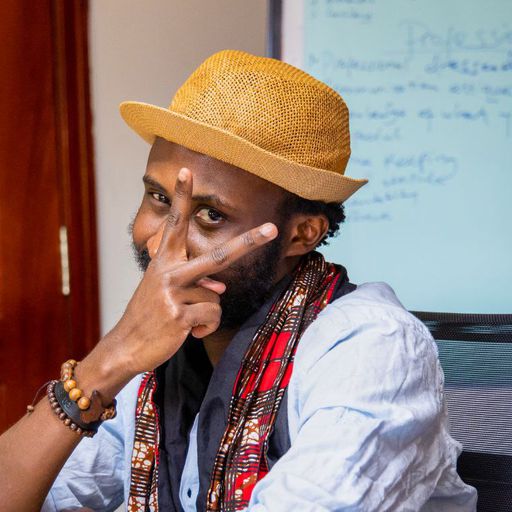

At least 773 local government officials have been interdicted and 22 cases are awaiting trial following a nationwide anti-corruption campaign led by minister Balaam Barugahara.
The figures have raised questions in Parliament about whether the campaign, which has exposed suspected misuse of public funds, will lead to successful prosecutions and recovery of stolen money.
During a debate on Wednesday, November 18, 2026, MPs welcomed the initiative but demanded a clearer strategy to ensure arrests translate into improved public services.
The debate followed Barugahara's report on his recent visits to Bushenyi, Kazo, Isingiro and Ibanda districts, where he uncovered suspected irregularities in the management of government resources.
In Isingiro, the minister reported that the District Service Commission had recruited teachers who lacked the required qualifications. He also identified up to 7,000 suspected ghost pupils on school records.
The findings prompted the arrest of local government officials and renewed concerns about weaknesses in district recruitment and accountability systems.
Barugahara called for changes to the Local Government Act to address irregular recruitment practices.
Pian County MP Remigio Achia welcomed the campaign's objectives but said the government needed a stronger approach to investigating corruption, prosecuting suspects and recovering public money.
"Corruption is economic sabotage and subversion of the country’s mission to transform. The Minister needs to go back to Cabinet and find a better strategy which includes prosecution and recovery of resources," said Achia.
Kasanda County North MP Patrick Nsamba questioned whether public meetings and arrests had produced meaningful improvements in service delivery.
"Ugandans are fed up of corruption and that is why people attend your meetings; but do they end up with better outcomes, or are we only counting the number of arrests. As you have reported, can we say the meetings resulted into better healthcare," Nsamba said.
Leader of the Opposition Joel Ssenyonyi also demanded prosecutions, arguing that exposing suspected corruption would achieve little without holding those responsible accountable.
"I am happy that government is now coming to our side to expose corruption but we need to be sure that there are results, if government is serious. Investigations should lead to prosecution," said Ssenyonyi.
Ssenyonyi warned against selective enforcement and urged the government to investigate major corruption cases involving substantial losses of public funds.
"The Inspector General of Government says that up to Shs10 trillion is lost in corruption, annually. That is the money we need to go after," Ssenyonyi said.
Nakasongola District Woman MP Victorious Zawedde encouraged fellow legislators to participate in the campaign by identifying suspected misuse of government resources in their constituencies before the minister's visits.
However, she cautioned against violating the rights of suspects during arrests.
"The way these suspects are arrested ought to be reviewed. Rights of suspects should be respected," she said.
Kashongi County MP Genensio Tumuramye raised concerns about the safety of people who report corruption.
"Ugandans want to see transparency in the fight against corruption, but we need appropriate measures in place to recover funds. What measures are in place to protect whistle blowers," he asked.
Responding to the concerns, Barugahara said the campaign had led to the interdiction of 773 officials, while 22 cases were pending before the courts.
"Interdictions are done to enable objective investigations. We are investigating and cases will be handled," he said.
He explained that the government had strengthened investigative teams to speed up the handling of corruption cases involving local government officials.
According to Barugahara, President Yoweri Museveni assigned 12 police detectives to support the campaign and established five teams to operate across the country.
The government also deployed four officers from the Directorate of Public Prosecutions to handle local government case files.
Barugahara said authorities had acquired vehicles to support investigations and transport suspects.
"We have procured three pick-up trucks for the detectives and three for transporting suspects. Next week we shall be in Lango and West Nile sub regions," Barugaraha said.
The campaign began in July 2026 and has covered several parts of Uganda, including Bugisu, Rwenzori, Bunyoro, Kigezi and Ankole.
It involves public meetings, field inspections and audits of government programmes to identify suspected corruption and failures in service delivery.
While lawmakers acknowledged the campaign's role in exposing irregularities, they maintained that its success should be measured by prosecutions, recovery of public funds and improvements in services rather than the number of officials arrested or interdicted.


