Spiro to triple battery-swapping hubs as electric motorcycle demand grows


Electric motorcycle company Spiro Uganda plans to increase its mega battery-swapping hubs from four to 11 by December 2026 as demand for electric motorcycles continues to grow across the country.
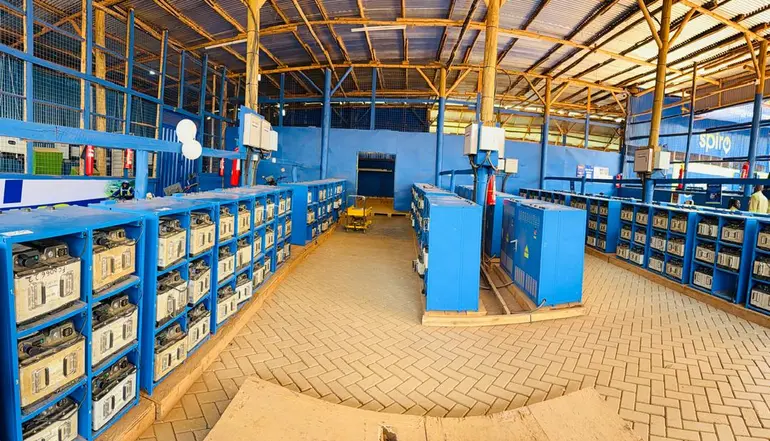
The company says each hub can charge at least 200 batteries simultaneously, helping reduce waiting times and improve access to charged batteries for riders.
Spiro Uganda deputy country director Bruce Mucunguzi announced the expansion during the Renewable Energy Conference and Expo 2026 at Kampala Serena Hotel.
The conference, organised by the Ministry of Energy and Mineral Development and the National Renewable Energy Platform, ran under the theme “From Systems to Scale”.
Mucunguzi said Spiro is introducing mega swapping hubs powered by solar energy and electricity from the national grid to support its growing network.
The company has established four such facilities in Mukono, Soroti, Jinja and Bukoto in Kampala.
These hubs support more than 360 battery-swapping stations across Uganda, where riders can exchange depleted batteries for fully charged ones instead of waiting for conventional charging.
Mucunguzi said expanding the infrastructure must go hand in hand with reliable maintenance services, spare parts and rider safety.
He attributed the growing adoption of Spiro motorcycles to business models designed to address challenges that previously discouraged customers from switching to electric transport.
The company believes that providing accessible battery-swapping facilities and dependable after-sales services will encourage more boda boda operators and other motorcycle users to embrace electric mobility.
Government reports growth in local production
Meanwhile, Allan Muhumuza, the team leader of the Mobility Bureau at the Ministry of Science, Technology and Innovation, said government policies are attracting more investment into Uganda's electric vehicle industry.
He revealed that the country's installed electric vehicle production capacity reached 79,000 units annually in 2025.
Of these, 25,000 electric vehicles, mainly motorcycles, were manufactured locally.
Muhumuza said the growing number of manufacturers and improvements in technology are helping reduce the cost of electric vehicles.
He expects electric vehicles to become cheaper than petrol- and diesel-powered alternatives as production increases.
The government has identified electric mobility as an important sector in its efforts to promote local manufacturing, reduce dependence on fossil fuels and support cleaner transport.
Government drafts electric vehicle regulations
Eng Derick Birimumaso, a senior official at the Ministry of Energy and Mineral Development, said Uganda must strengthen regulations as the electric mobility industry expands.
He urged stakeholders to move beyond small-scale pilot projects and develop standards that support wider adoption of electric vehicles.
Birimumaso identified vehicle safety, battery management, charging infrastructure and the security of riders as key areas requiring regulation.
He said the government is drafting regulations to guide the development and operation of electric vehicle infrastructure.
The proposed framework will also address electricity metering, tariffs, billing and licensing.